Tough vs Slim phone case: which one fits the way you use your phone
Tough adds a shock-absorbing liner and raised edges; Slim keeps the phone close to its own size. A plain comparison, including when each is the wrong pick.
Written by the YOONIG team · Updated · 6 min read

Tough is two layers with raised edges; Slim is one thin shell
Choose Tough if you drop your phone or carry it loose in a pocket, and Slim if you want it to stay close to its own size and it rarely hits the floor. Tough is a polycarbonate shell over a TPU liner with raised edges at the screen and camera. Slim is a single lightweight polycarbonate shell that mainly guards against scratches.
The print is the same on both. So is the finish choice, glossy or matte. What changes is how much case sits between your phone and the ground, and how much of it you feel in your hand. If you're weighing every build and not only these two, start with how to choose a phone case.
The two builds side by side
Everything here is from the maker's specification for each build. We don't publish a thickness or weight for either one, so the table doesn't pretend to.
| Feature | Tough | Slim |
|---|---|---|
| Construction | Two layers: polycarbonate outer shell, TPU inner liner | One-piece polycarbonate shell |
| What the maker says it does | Shell resists daily impacts; liner absorbs shock | Slim, lightweight; keeps the phone safe from scratches |
| Raised edges | Yes, at the screen and camera | Slight |
| Wireless charging | Compatible | Compatible |
| MagSafe magnets | None | None |
| Finish | Glossy or matte | Glossy or matte |
| Wrapped round the edges, UV-protected | Wrapped round the edges, UV-protected | |
| Phones | iPhone, Samsung Galaxy, Google Pixel | iPhone and Samsung Galaxy |
| Drop-test rating | None published | None published |
What the second layer and the raised edge are for
A hard shell on its own is good at one thing: staying in shape, so a knock is spread over the back of the phone. It isn't good at slowing the phone down. That's the TPU liner's job in a Tough case. TPU is flexible, it gives a little on impact, and the maker lists it as the layer that absorbs shock.
The raised edge matters just as much, and it's easy to overlook. Apple's design rules for accessory makers say exposed glass should stay at least 0.85 mm away from a flat surface in any orientation with the case on, ideally 1.00 mm, and that the way to get there is to build features around the glass (Apple: Accessory Design Guidelines). That is exactly what a lip around the screen and camera does: when the phone lands flat, the case touches down first.
We aren't claiming a measured lip height for Tough, because we don't publish one. The point is the design difference. Tough has raised camera and screen edges by specification. Slim's edge is slight, so a phone in a Slim case laid face down sits closer to the table, and in a flat fall the screen has less standing between it and the floor. If you go Slim, a screen protector does more work for you; our piece on whether screen protectors work explains what they do and don't cover.
Three questions that settle it
How does your phone usually fall? If the honest answer is out of a hand at standing height, onto a sidewalk or a tiled floor, take Tough. If it's off the arm of a sofa onto carpet a couple of times a year, the extra layer is solving a problem you don't have.
Where does it live? A phone in a jacket pocket or a bag with a dedicated sleeve is rarely in danger, and Slim keeps it easy to slide in and out. A phone in a back pocket, a cup holder or a stroller tray gets knocked from every side, which is the case for two layers.
How do you charge? Both builds work on ordinary wireless chargers and neither has magnets. If you rely on a magnetic charger, wallet or car mount with an iPhone, neither Tough nor Slim is the right build, and the next section is the one to read.
Charging and MagSafe: where both builds stop
Tough and Slim are both specified as wireless charging compatible, and Tough's specification adds the words not including MagSafe. In practice that means a flat charging pad works through either case, but nothing magnetic will hold on. A magnetic charging puck is still a wireless charger, so it may charge the phone if you place it carefully, but it won't snap into position or stay there in a car.
For that, we make a separate build: MagSafe compatible cases use the same two-layer construction as Tough with a magnetic module built in. They're for iPhone only, and in our range they start at the iPhone 13.
If wireless charging stops working in any case, the phone makers give the same first step. Apple says to try removing a thick, metal or battery case (Apple: How to wirelessly charge your iPhone). Samsung says to confirm a non-Samsung case is no thicker than 5 mm and to remove cases while troubleshooting (Samsung: Galaxy phone will not charge wirelessly). Then center the phone on the pad and try again.
Which phones get Tough, Slim or both
Not every model has both builds, so check before you set your heart on one. The rule of thumb in our range: most iPhone and Galaxy models have both, Pixel phones have Tough only, and two iPhones have no Slim.
Your model's page lists exactly what's available. If a build isn't shown there, we don't make it for that phone, and a case for a neighboring model isn't a safe substitute. Start from our device list if you aren't sure which page is yours.
| Phones | Tough | Slim |
|---|---|---|
| iPhone X, XS, XS Max, XR, 8, 8 Plus | Yes | Yes |
| iPhone 11, 12, 13, 14, 15, 16 and 17 lines, iPhone Air | Yes | Yes |
| iPhone 16e and iPhone 17e | Yes | No |
| iPhone 18 Pro and 18 Pro Max | Yes | Yes |
| Galaxy S20 to S26 lines, including Plus, Ultra and FE models we list | Yes | Yes |
| Pixel 6, 6 Pro, 7, 8, 8 Pro, 9, 9 Pro, 9 Pro XL | Yes | No |
When each one is the wrong choice
No build is right for everyone, and it saves a reorder to say so up front. Since every case is printed to order for one model, a wrong build is not something we can swap after it's made.
- Slim is wrong if you drop your phone on hard ground. It's a scratch guard with a slight edge, with no liner behind it.
- Slim is wrong if you don't use a screen protector and often lay the phone face down on gritty surfaces.
- Tough is wrong if what you love about your phone is how small it feels. Two layers are more case than one, in the hand and in the pocket.
- Tough is wrong if you want MagSafe accessories to hold on. It has no magnets; the MagSafe compatible build does.
- Both are wrong if you want your phone's own color to show. That's what the Clear build is for.
- Both need the same care: a soft, damp cotton or microfiber cloth and no chemicals. Slim's care notes add keeping it away from high-alcohol liquids, hand and sun creams, direct sunlight and excessive heat.
Frequently asked questions
Is a slim case enough protection?
For scratches and scuffs, yes: that's what our Slim case is specified to guard against. For repeated drops onto hard surfaces, a two-layer case with raised edges is the more suitable build.
Does a Tough case work with wireless charging?
Yes. Tough is specified as wireless charging compatible. It has no MagSafe magnets, so magnetic chargers and accessories won't snap onto it.
How much thicker is Tough than Slim?
We don't publish thickness or weight figures for either build, so we won't give a number. Tough has a second layer and raised edges, so expect it to feel fuller in the hand than a single shell.
Do Tough and Slim cases have the same print?
Yes. The same designs are offered on both builds, printed round the edges, and both come in a glossy or matte finish.
Can I get a Slim case for a Google Pixel?
Not from us. For the Pixel models we list, we make the Tough build only.
Shop the story
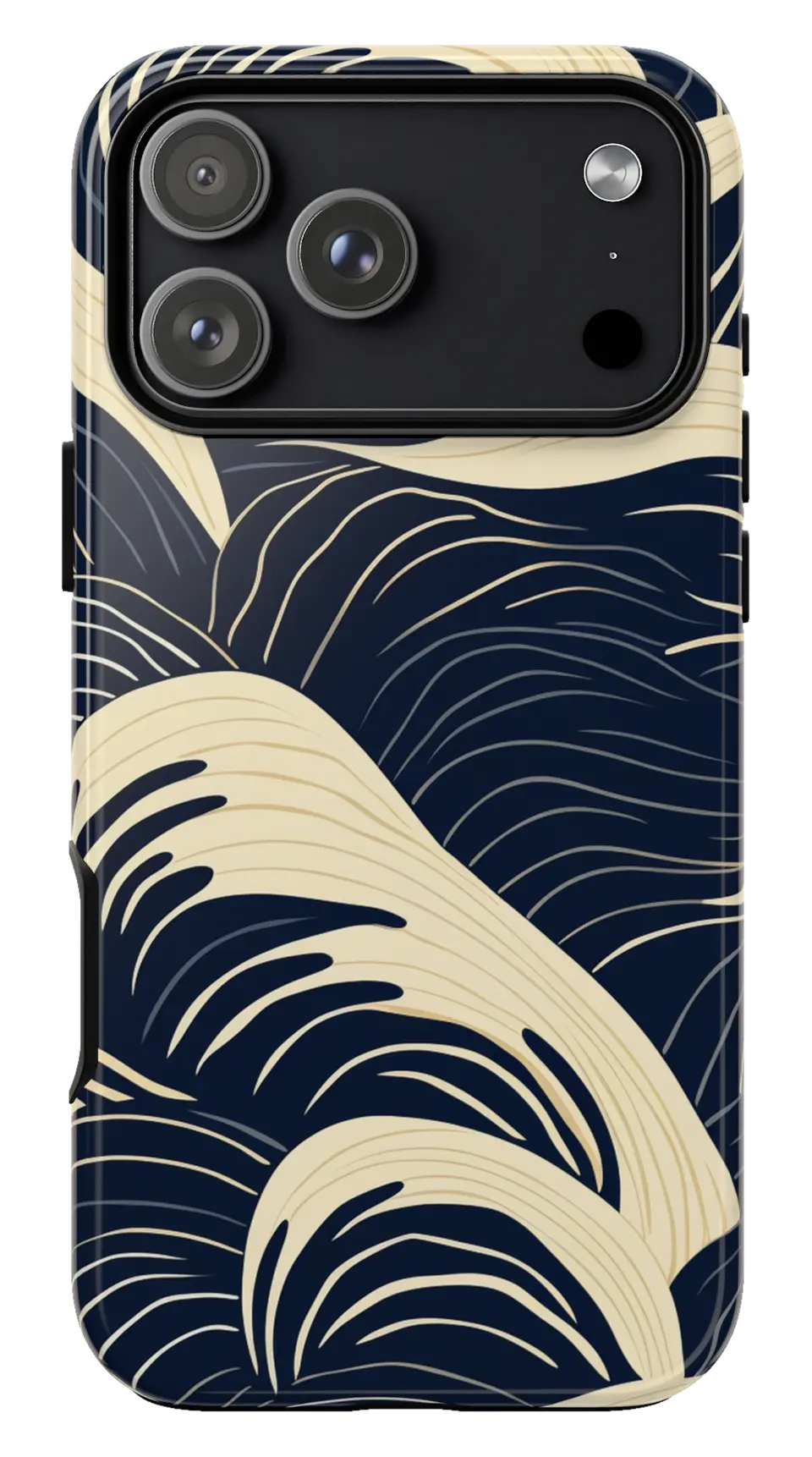 Navy Cream Waves Phone caseFrom$29.00Phone case · choose your model
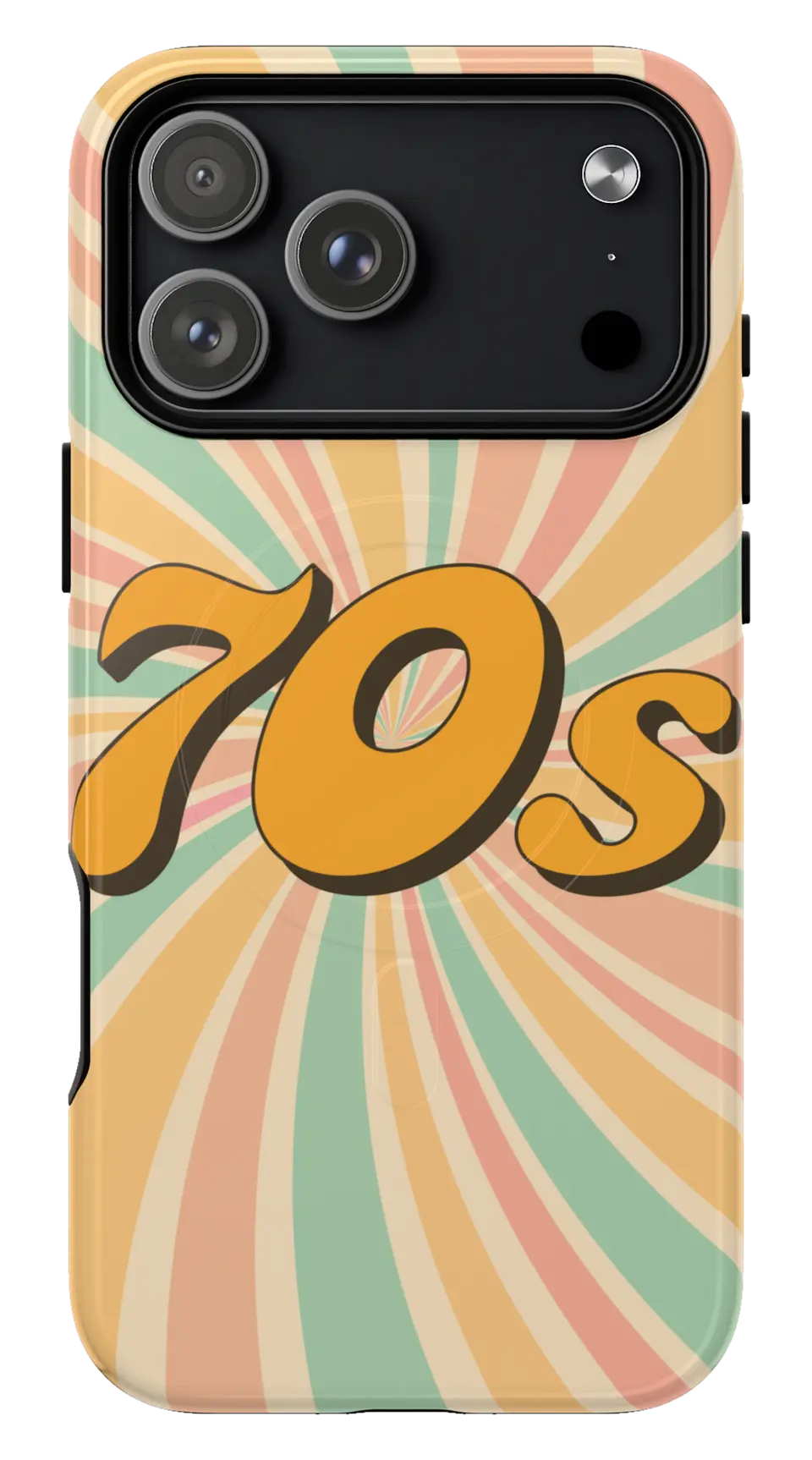 70s Retro Swirl Phone caseFrom$29.00Phone case · choose your model
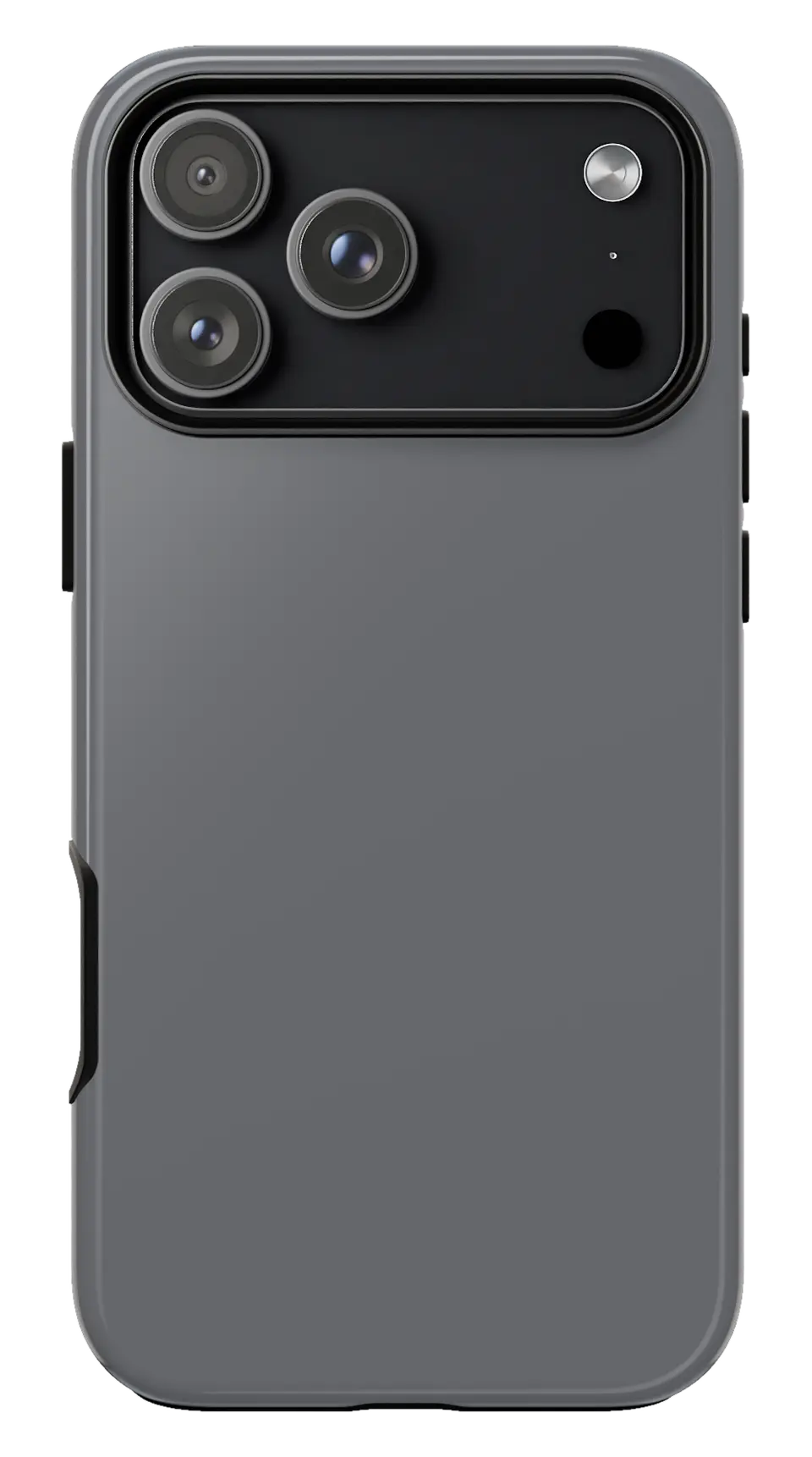 Storm Gray Phone caseFrom$29.00Phone case · choose your model


